PYMNTS Report Preview: Closing the Growing Divide Between Service Providers & Customers

By Nicole Haskins
VP, Paymentus
Recently, the Paymentus team enjoyed a preview of our upcoming Service Commerce performance gap study with PYMNTS. The first-of-its-kind report features data points from the 2026 Service Commerce Performance Index (SCPI), which quantifies the structural performance gap between more than 2,500 consumers and hundreds of billers.
The information gathered paints a compelling picture of an industry experiencing a rapid transformation in customer expectations and what it means to serve. Without sharing specific information, I did want to expand on my main takeaway from the initial results: Billers are suffering from a profound blind spot, consistently overestimating their delivery while underestimating consumer dissatisfaction.
The Growing Divide Between Service Providers and Customers
If there’s one thing the initial data spelled out it’s that of a glaring Service Commerce gap, most notably centered around customer churn. While service providers are keen to blame competitors or life events for churn to a large degree, many customers indicate a preference to switch providers based simply on a poor billing and payment experience.
Starting from this point, it makes sense to learn that general issues impacting the billing and payment experience (login friction, limited payment options, lack of self-serve resolution capabilities, etc.) are immediate breaking points for customers, but are often dismissed as occasional blips by service providers.
The challenge here is not simply to unearth issues that may not even surface until a customer is lost or a payment is late, but to understand the underlying factors that are driving this divide.
Overcomplicated Systems Impact Performance
Service providers would love to offer their customers the world, but the world is a pretty complex and complicated place. Much is the same with billing, payment, and engagement solutions that require added gateways, patches for integration, or even additional vendor contracts to launch options such as digital wallets.
Systems that are cobbled together act like it. Data is siloed and fragmented. Experiences differ by channel. Customer service representatives operate with incomplete information. The system may technically be expansive, but it fails to operate cohesively. And when it’s time to expand, it’s just another piece that’s potentially tacked on without being cohesive within the system as a whole. That’s where the friction starts and the divide begins.
Legacy Systems Maintain Familiarity But Fall Short of Expectations
The idea of a system being “tried and true” can work in many respects, but a strict adherence to this axiom is a recipe for dissatisfaction. Inertia is a stumbling block to progress. What is familiar and comfortable for service providers may be too simplistic or outdated to consumers.
The data exposes a massive disconnect between payment preference and operational acceptance. For example, alternative options like digital wallets are highly demanded, yet a massive demand-to-supply gap remains because legacy systems rely on paper checks or limited rails built for back-office convenience. This may seem easy to manage but fails to address customer needs and expectations.
Additionally, we have seen increasing demand for alternative payment types and methods such as digital wallets. Digital wallets are a perfect example of a payment option that skyrocketed in popularity within the merchant space, which continues to reward fast followers in other areas. If a customer has the ability to use digital wallets for discretionary purchases, they’re likely to wonder why an essential service doesn’t offer the same flexibility.
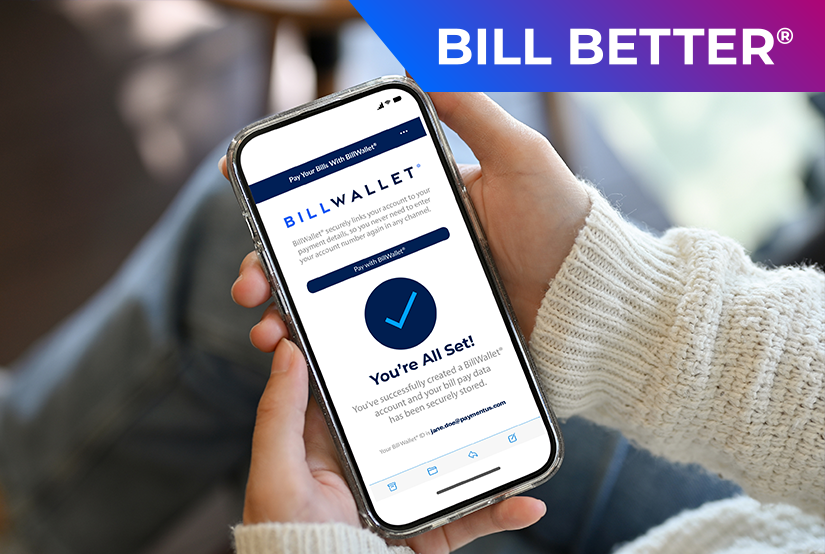
Digital wallets also offer the simplicity and speed that are now expected in all payments. This is where the promise of BillWallet® comes to life. By eliminating login friction, BillWallet® delivers the ideal digital wallet experience that is increasingly valued by bill payers, particularly younger payers.
Underestimating the Importance of Billing & Payments to the Customer Relationship
One of the guiding principles of Paymentus is helping service providers become Built To Serve. Service must be at the heart of any solution, otherwise we’ve lost sight of what really matters: the satisfaction of the end consumer.
The data shows that service providers underestimate the power that billing and payments has over forming long-lasting customer relationships. As the most frequent customer touchpoint, billing and payments offers a service opportunity unlike any other. That’s because it offers so many different ways to meet customer expectations: payment type and channel options, payment flexibility, AutoPay optimization, easily accessible account information and data, agentic self-service tools such as chatbot, personalization opportunities, and so much more.
Make no mistake, the billing and payment experience is your most critical loyalty driver—and your single greatest revenue risk when it fails.
Closing the Service Provider-Consumer Divide
The good news is that while the divide may be pronounced, it’s not permanent, nor is it particularly difficult to overcome. The first step is more psychological than technological. Service providers must begin seeing the billing and payment experience as their customers do. Relegating this essential part of the relationship to a mere monthly function risks friction and churn.
We encourage all service providers to begin mapping their modernization strategy around the idea that billing and payments is the most untapped resource they have for driving not only revenue but loyalty. Whatever your organization’s core function, an underwhelming experience before, during, and after the point of payment can undermine all else. When billing and payments are treated as a strategic relationship lever rather than a back-office transaction, customer retention follows.
The Paymentus-PYMNTS performance gap study will be launching soon, and we want you to be the first to receive a copy! Contact us today to request your copy of the report once it is published. Featuring responses from more than 2,500 consumers and hundreds of billers, gain unique insights into the service opportunities and challenges facing many organizations, with actionable strategies on how service providers can improve performance to create closer customer relationships.
The Paymentus-PYMNTS performance is now available! Featuring responses from more than 2,500 consumers and hundreds of billers, gain unique insights into the service opportunities and challenges facing many organizations, with actionable strategies on how service providers can improve performance to create closer customer relationships.